Hello! ¡Hola! Hola!
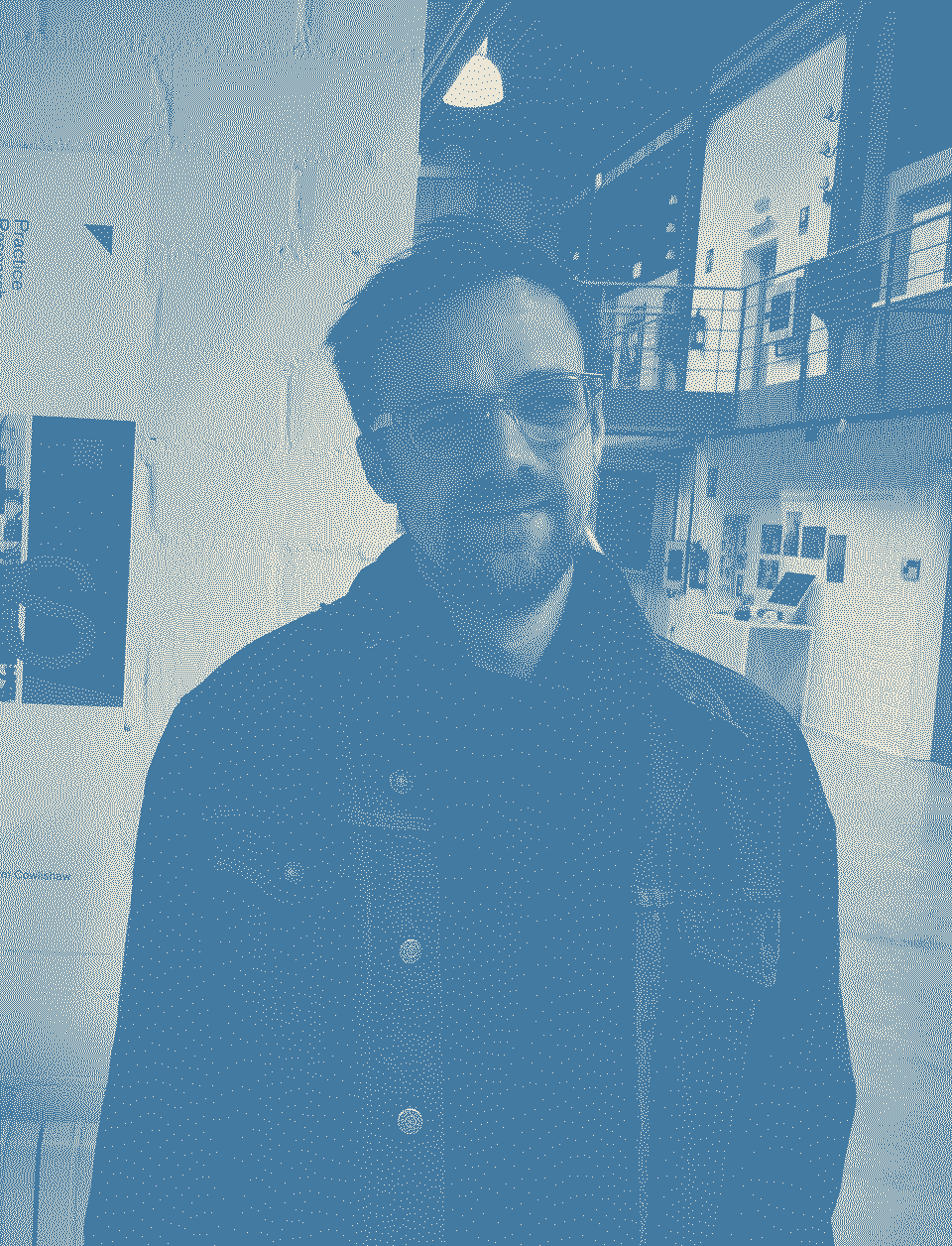
[en] Hello, my name is Tim. I am an interaction designer, researcher and sometimes also get called a “creative technologist” (you know, a “mostly art-y person who also knows how to code”). I’m originally from London, and now based in Tarragona, Catalonia. If you use Mastodon, you can find me at @mistertim@assemblag.es, or you can get in touch by emailing me. Here are some of the things that I am spending my time on at the moment.
[es] Hola, soy Tim – Soy diseñador de interacción, investigador y a veces me llaman “creative technologist” (o sea: un tipo más o menos ‘artistico’ que también sabe de códigos y tal). Soy originalmente de Londres, y ahora vivo en Tarragona. Si usas Mastodon, me puedes encontrar en @mistertim@assemblag.es, o me puedes mandar un correo, si quieres. Estas son algunas de las cosas en las que estoy dedicando mi tiempo en este momento.
[cat] Hola, sóc el Tim – Sóc dissenyador d’interacció, investigador i de vegades em diuen “creative technologist” (és a dir: un tipus més o menys ‘artístic’ que també sap de codis i tal). Sóc originalment de Londres, i ara visc a Tarragona. Si uses Mastodon, em pots trobar a @mistertim@assemblag.es, o em pots enviar un correu, si vols. Aquí hi ha algunes de les coses en què estic passant el meu temps en aquest moment.
My research interests Mis intereses investigativos Els meus interessos investigatius
[en] My PhD investigates the phenomenon of digital waste from an ecological perspective. I’m particularly interested in the ways in which the ways in which we discard digital things (in the sense of files, software, data, media) have consequences for how we discard physical devices (i.e. e-waste), and the use of energy, water, and other material resources by digital media. I also examine in the ways in which interaction design practices are entangled with these materialities. It’s a practice research project, and draws on design research, discard studies, STS and the environmental humanities.
[es] Mi doctorado investiga el fenómeno de los “residuos digitales” desde una perspectiva ecológica. Estoy particularmente interesado en las maneras en que desechamos cosas digitales (es decir: software, datos, medios), las cuales tienen consecuencias sobre cómo desechamos dispositivos físicos (lo llamado “e-waste”), y el consumo del agua, de la energía y de otros recursos materiales de los medios digitales. También investigo las maneras en que las prácticas del diseño de interacción están enredadas con dichas materialidades. Mi proyecto es una tesis basado en prácticas, y recurre a los campos de investigación en diseño, “discard studies”, ECTS, y las humanidades medioambientales.
[cat] El meu doctorat investiga el fenomen dels “residus digitals” des d’una perspectiva ecològica. Estic particularment interessat en les maneres en què rebutgem coses digitals (és a dir: programari, dades, mitjans), les quals tenen conseqüències sobre com rebutgem dispositius físics (l’anomenat “e-waste”), i el consum de l’aigua, de l’energia i altres recursos materials dels mitjans digitals. També investigo les maneres en què les pràctiques del disseny d’interacció estan embullades amb aquestes materialitats. El meu projecte és una tesi basat en pràctiques, i recorre als camps de recerca en disseny, “discard studies”, ECTS, i les humanitats mediambientals.
Work with me! ¡Trabaja conmigo! Treballa amb mi!
[en] I’m available for hire as a freelance designer, researcher, and/or developer – I’ve worked on all sorts of projects including gallery installations, websites, mobile applications, physical prototypes and immersive experiences. I can happily take on any of these roles, although I find I’m most useful when I’m working in the intersection of two or more of these disciplines. Some ways this has worked well in the past have been the following:
- Working on research or prototyping projects where a mixture of critical, creative, and hands-on technical skills are required.
- Taking on entire projects as a solo designer/developer.
- Acting as ‘glue’ between designers and developers in interdisciplinary teams, helping visual designers with tricky interaction problems, and/or aiding engineers to develop a sensibility for design detail.
- Being an expert technical collaborator or consultant on artistic or research-focused projects
- Being responsible for UX design and research on products with a more ‘technical’ user base.
You can see examples of these in my creative and commercial portfolios. If any of this sounds like something you need help with, we should chat!
[es] Estoy
disponible para trabajar como diseñador, investigador y/o desarrollador
autónomo. He trabajado en todo tipo de proyectos, incluidas
instalaciones artísticas, sitios web, aplicaciones móviles, prototipos
físicos y experiencias inmersivas. Puedo asumir felizmente cualquiera de
estos roles, aunque encuentro que soy más útil cuando trabajo en la
intersección de dos o más de estas disciplinas. Algunas maneras en que
esto ha funcionado bien en el pasado han sido las siguientes:
- Trabajando en proyectos de investigación o prototipos en los cuales hace falta una mezcla de habilidades creativas, críticas y técnicas.
- Encargándome de proyectos enteros como diseñador / desarrollador en solitario.
- Tomando un papel de ‘pegatina’ entre diseñadores y desarrolladores en equipos interdisciplinarios: ayudando a diseñadores visuales con retos complicados de interacción, o ayudando a ingenieros a desarollar una sensibilidad para los detalles del diseño.
- Siendo un colaborador experto técnico en proyectos artísticos o de investigación.
- Encargándome del diseño e investigación UX en productos dirigidos a usuarios de cáracter ‘técnico’.
Puedes ver ejemplos en mis portafolios creativo y comercial. Si algo de esto suena como algo que necesitas, ¡deberíamos hablar!
[cat] Estic
disponible per treballar com a dissenyador, investigador i/o
desenvolupador autònom. He treballat en tota mena de projectes, incloses
instal·lacions artístiques, llocs web, aplicacions mòbils, prototips
físics i experiències immersives. Puc assumir feliçment qualsevol
d’aquests rols, encara que trobo que sóc més útil quan treballo en la
intersecció de dues o més d’aquestes disciplines. Algunes maneres en què
això ha funcionat bé en el passat han estat les següents:
- Treballant en projectes de recerca o prototips en els quals cal una barreja d’habilitats creatives, crítiques i tècniques.
- Encarregant-me de projectes sencers com a dissenyador / desenvolupador en solitari.
- Prendre un paper “d’adhesiu” entre dissenyadors i desenvolupadors en equips interdisciplinaris: ajudant dissenyadors visuals amb reptes complicats d’interacció, o ajudant enginyers a desenvolupar una sensibilitat per als detalls del disseny.
- Sent un col·laborador expert tècnic en projectes artístics o de recerca.
- Encarregant-me del disseny i investigació UX en productes dirigits a usuaris de caràcter ‘tècnic’.
Pots veure exemples als meus portafolis creatiu i comercial. Si alguna cosa d’això sona com una cosa que necessites, hauríem de parlar!